
February 3, 2026
Forgotten Leads Database: How to Unlock Hidden Revenue in Your CRM
Your CRM contains a forgotten leads database—prospects who previously showed interest, downloaded resources, or started conversations but never converted. These warm leads represent thousands in hidden revenue you've already paid to acquire, making them far more valuable than cold prospects and one of the easiest ways to unlock immediate sales without additional marketing spend.
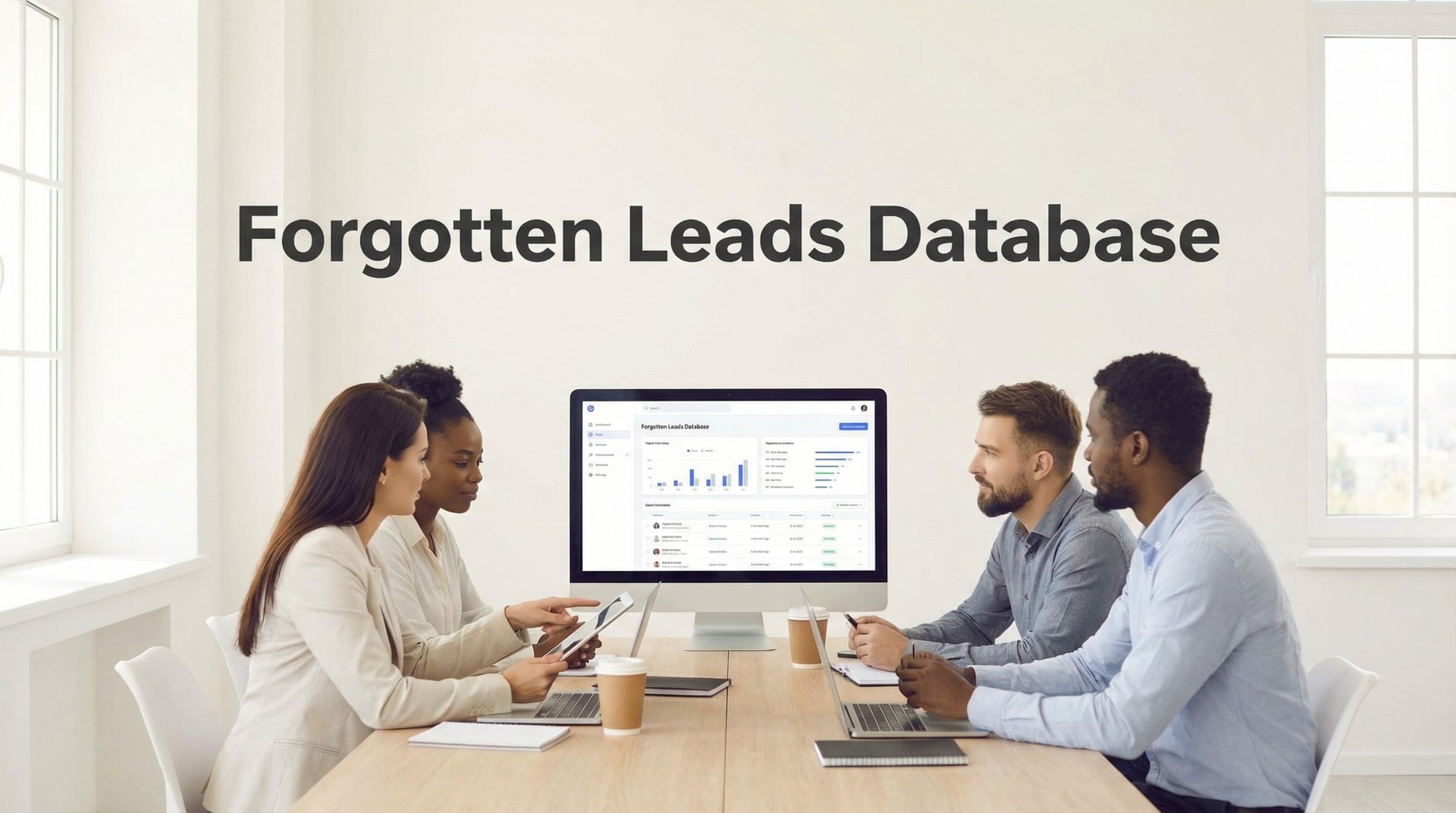

You open your CRM on a Tuesday afternoon, scrolling through contact after contact. Jennifer Thompson—inquired about your services last March. Mark Rodriguez—downloaded your pricing guide six months ago. Sarah Chen—visited your office for a consultation but never scheduled a follow-up. Each name represents a conversation that started but never finished, a potential customer who showed genuine interest and then... disappeared.
Here's what most business owners don't realize: you're looking at a gold mine.
These aren't cold prospects who've never heard of you. These are people who already raised their hand, expressed interest, and gave you their contact information. They're what we call your forgotten leads database—the collection of prospects who engaged with your business but slipped through the cracks before converting. And right now, they're sitting in your CRM representing thousands of dollars in revenue you've already paid to acquire but never collected.
The Anatomy of a Forgotten Lead
Let's get specific about what we mean by a forgotten lead. These aren't random names scraped from the internet or purchased lists of questionable quality. A forgotten lead is someone who took a meaningful action that indicated genuine interest in what you offer.
Maybe they filled out a contact form on your website asking for more information. Perhaps they downloaded a guide, attended a webinar, or requested a quote. In brick-and-mortar businesses, they might have visited your location in person, had a consultation, or asked detailed questions about your products or services. The key characteristic: they engaged with you in a way that signaled real intent.
Then something happened—or more accurately, nothing happened. The follow-up stopped. The conversation went cold. They moved from "hot prospect" to "I'll get back to them later" to complete radio silence.
Why does this happen so consistently across businesses of all sizes? The reasons are surprisingly common. Staff turnover means the salesperson who was building rapport with a prospect leaves, and their leads get redistributed or lost in the shuffle. Manual follow-up systems fail because humans are busy, distracted, and naturally prioritize the newest, hottest leads over contacts from weeks or months ago.
Timing mismatches play a huge role too. A prospect might have been genuinely interested but facing a circumstance that prevented immediate action—budget approval pending, waiting for a specific life event, or simply needing more time to make a decision. Your team marks them as "not ready now" with good intentions to circle back later. But later never comes because there's no systematic process to revisit these contacts.
The hidden cost of forgotten leads is staggering when you think about it clearly. Every contact in your database represents money you already spent. Whether through advertising, content marketing, networking events, or referral programs, you invested resources to get that person interested enough to reach out. When they don't convert and you don't continue engaging them, you're essentially throwing away your customer acquisition investment with zero return.
Why Traditional CRM Management Fails These Contacts
Most businesses treat their CRM like a digital filing cabinet. Contacts go in, get tagged with a status, and sit there waiting for someone to remember they exist. This "set it and forget it" approach might work for organizing information, but it's terrible for revenue generation.
The fundamental problem is that traditional CRM systems are passive. They store data beautifully, but they don't do anything with it unless a human takes action. And humans, no matter how well-intentioned, have bandwidth limitations that make consistent follow-up nearly impossible at scale. Understanding how to manage dormant leads in CRM systems is the first step toward solving this problem.
Think about how a typical sales team operates. They wake up to new leads from yesterday's marketing efforts. They have scheduled calls with prospects who are actively in the pipeline. They're responding to emails from hot opportunities close to closing. Their day fills up fast with urgent, immediate tasks.
Where does that leave the contact who inquired four months ago? Or the prospect who seemed interested last quarter but said to check back later? These contacts aren't screaming for attention, so they naturally fall to the bottom of the priority list. It's not negligence—it's simple human nature to focus on what's directly in front of you.
The data decay problem compounds this challenge. Contact information has a shelf life. People change phone numbers, switch email addresses, and move to new roles. But here's the twist: while the contact details might age, the underlying interest often remains perfectly valid. Someone who was curious about hearing aids six months ago likely still has hearing challenges. A business owner who inquired about your services last year probably still has the same business problems.
Traditional CRM management also lacks intelligence about when to re-engage. A salesperson might think "I should reach out to old leads," but which ones? What should they say? How do you personalize outreach to hundreds of contacts without spending weeks crafting individual messages? Without good answers to these questions, the task feels overwhelming, so it doesn't happen.
Identifying High-Value Forgotten Leads in Your Database
Not all forgotten leads are created equal. Before you start a reactivation campaign, you need to identify which contacts are most likely to convert if properly re-engaged. This is where smart segmentation makes the difference between wasted effort and significant revenue recovery.
Recency of Last Engagement: Contacts who engaged within the past 3-12 months typically respond better than those who went cold years ago. Their interest is more recent, their circumstances are more likely to still be relevant, and they'll actually remember who you are when you reach out.
Original Lead Source Quality: How did they find you originally? Someone who came through a referral or attended an in-person event typically represents higher quality than a generic web form fill. They had a warmer introduction to your business, which often translates to stronger underlying interest.
Demographic and Firmographic Fit: Look at whether the contact matches your ideal customer profile. Do they have the budget capacity for your solution? Are they in the right industry or life stage? A perfectly timed message to someone who isn't actually a fit will still fail.
Previous Interaction Depth: This is huge. A contact who had multiple touchpoints—downloaded content, attended a webinar, AND had a phone consultation—showed much stronger intent than someone who simply filled out a form once. Deeper engagement history predicts higher reactivation potential. Using AI lead scoring can help you automatically identify these high-intent prospects hiding in your database.
The concept of "warm dormant" leads deserves special attention. These are contacts who showed strong buying signals but encountered legitimate barriers to immediate conversion. Maybe they were waiting for budget approval at their company. Perhaps they needed to coordinate with a spouse on a major purchase decision. They might have been dealing with a temporary life circumstance that took priority.
These warm dormant leads are your highest-value targets because the interest was real—it was just poorly timed. When you re-engage them now, you're not trying to create interest from scratch. You're simply restarting a conversation that was interrupted by circumstance, not lack of desire.
Here's how to conduct a practical audit of your CRM to surface reactivation-ready contacts. Start by filtering for contacts created between 3-18 months ago—old enough that they've been neglected, recent enough that they're still relevant. Then layer on engagement filters: anyone who had at least two interactions with your business (form fill plus email open, consultation plus content download, etc.).
Next, exclude anyone who explicitly opted out or who you know is no longer a fit. Finally, sort by original lead source quality, prioritizing referrals, event attendees, and high-intent actions like pricing requests or consultation bookings. What you're left with is your reactivation gold mine—contacts who showed real interest, fit your ideal customer profile, and simply fell through the follow-up cracks.
AI-Powered Database Reactivation: The Modern Solution
This is where the game changes completely. Traditional database reactivation meant a salesperson manually going through old contacts, crafting individual emails, and hoping for responses. It was time-consuming, inconsistent, and frankly, almost no one did it well because the manual effort required was just too high.
AI-driven reactivation flips this entire model. Instead of requiring human bandwidth for every single outreach, artificial intelligence handles the heavy lifting of personalization, timing, and sequence management at scale. The result? You can re-engage hundreds or thousands of forgotten leads with messaging that feels personal and relevant, without anyone on your team spending hours writing emails.
Here's how modern AI reactivation actually works. The system analyzes each contact's history—what they inquired about, when they last engaged, what content they showed interest in, and any notes from previous conversations. It uses this information to craft hyper-personalized outreach that references their specific situation.
Instead of a generic "Hey, just checking in" message that screams automation, the AI generates something like: "Hi Jennifer, I noticed you were exploring our consultation services back in March. I wanted to reach out because we've recently added some options that might better fit what you were looking for." The message acknowledges the time that's passed, references their actual interest, and provides a fresh reason to re-engage.
Sequence-based reengagement is where AI really shines. Rather than a single outreach attempt, the system creates multi-touch sequences across both SMS and email. If someone doesn't respond to the initial message, they automatically receive a follow-up a few days later with a different angle. Learning how to build effective SMS drip campaigns can dramatically improve your reactivation results.
These sequences feel personal, not robotic, because they're built on actual data about the individual contact. And because they're automated, they happen consistently without anyone needing to remember to send them. The system works around the clock, reaching out to forgotten leads while your team focuses on closing active opportunities.
Timing intelligence is another critical component. AI can analyze patterns in your data to determine optimal contact windows. Maybe your industry sees higher response rates to SMS messages sent on Tuesday mornings versus Friday afternoons. Perhaps email sequences that start with a 3-day gap between messages perform better than daily outreach. The system learns from response patterns and continuously optimizes timing to maximize engagement.
The beauty of this approach is scalability. Whether you have 50 forgotten leads or 5,000, the effort required from your team remains essentially the same. You set up the reactivation parameters once, the AI handles the execution, and you focus on responding to the conversations that actually start. It's the difference between spending weeks on manual outreach with mediocre results versus implementing a system that runs continuously in the background, turning dormant contacts into active opportunities.
Hearing Aid Practices: A Case Study in Database Reactivation
The audiology industry offers a perfect illustration of why database reactivation matters so much. Hearing aid practices face unique challenges that make forgotten leads both common and incredibly valuable when properly reactivated.
Start with the consideration cycle. Unlike buying a pair of shoes or even a laptop, hearing aid purchases involve long decision-making timelines. Patients often take months or even years between recognizing they have hearing loss and actually purchasing devices. They need time to accept the reality of their condition, research options, consult with family members, and plan for the financial investment.
This extended timeline means timing mismatches are inevitable. A patient might come in for an initial consultation, be genuinely interested, but not quite ready to commit. They say they'll "think about it" or "come back when they're ready." Without systematic follow-up, these patients disappear into the forgotten leads database, even though their need for hearing aids hasn't gone away.
Common forgotten lead scenarios in hearing care practices are remarkably consistent. You have patients who completed consultations and even got fitted for devices but delayed the final purchase decision. Perhaps they wanted to check with their insurance, or they needed to save up for the out-of-pocket costs. Without continued engagement, they never return to complete the transaction.
Past customers represent another huge opportunity. Hearing aid technology advances rapidly, and devices typically need replacement or upgrading every few years. A patient who purchased hearing aids five years ago is probably due for new ones, but if your practice hasn't stayed in touch, they might go elsewhere or simply continue struggling with outdated technology. Implementing automated follow-up for audiologists ensures these patients never slip through the cracks.
Referrals who never scheduled are particularly frustrating. Someone cared enough to recommend your practice to a friend or family member. That referred person might have even called to inquire about services. But if they didn't immediately book an appointment and no one followed up consistently, that warm referral becomes just another forgotten lead.
The revenue opportunity in audiology database reactivation is substantial. Hearing aids represent significant transaction values—often several thousand dollars per patient. This means even modest reactivation rates translate to meaningful revenue. If you reactivate just 10 forgotten leads from your database and convert half of them, you're looking at tens of thousands in revenue from contacts you'd already paid to acquire. For a detailed approach, explore database reactivation for audiologist strategies specifically designed for hearing care practices.
Life-stage triggers make reactivation particularly effective in hearing care. As people age, hearing challenges typically worsen, creating natural reengagement windows. A patient who wasn't ready for hearing aids two years ago might now be experiencing more pronounced difficulties that make them receptive to revisiting the conversation. Technology upgrade opportunities provide another compelling reason to reach back out, offering improved features and capabilities that weren't available during their original consultation.
Building Your Reactivation Strategy: First Steps
You're convinced that your forgotten leads database represents real opportunity. Now what? Building an effective reactivation strategy starts with some foundational work before you send a single message.
Database hygiene comes first. Before you start reaching out to old contacts, you need to clean and organize your CRM. Remove obvious duplicates where the same person appears multiple times with slight variations in spelling or contact info. Update any information you know has changed. Flag contacts who've explicitly opted out of communications or who you know are no longer viable prospects for legitimate reasons.
This cleaning process might seem tedious, but it's essential. Sending reactivation messages to outdated email addresses or disconnected phone numbers wastes your outreach capacity and makes your data even messier. Take the time to ensure you're working with accurate, current information before launching campaigns. If you're dealing with a stale CRM database, proper cleanup is the foundation of any successful reactivation effort.
Next, segment your database thoughtfully. Not every forgotten lead should receive the same message or be contacted through the same channel. Group contacts by their original interest, how long ago they engaged, and what stage they reached in your sales process. Someone who had multiple consultations but never purchased needs a different approach than someone who simply downloaded a guide and never responded to follow-up.
Your message framework is critical. The worst reactivation messages pretend no time has passed or act like the prospect should remember exactly where they left off. The best messages acknowledge the gap, provide context about why you're reaching out now, and offer fresh value that makes reengagement worthwhile.
Think about crafting messages that follow this structure: acknowledge the previous interaction, provide a compelling reason to reconnect based on something new or timely, and make the next step incredibly easy. For example: "Hi Mark, you inquired about our services last spring. I wanted to reach out because we've just introduced a new program that addresses exactly what you were looking for. Would you be open to a quick conversation this week?"
Channel selection matters too. SMS tends to see higher open rates and faster responses than email, making it ideal for initial reactivation outreach. Mastering SMS conversion optimization can help you turn those high open rates into actual appointments. Email works well for providing more detailed information or resources once someone has responded. Many effective reactivation sequences use SMS for the first touch to break through the noise, then move to email for deeper engagement.
Measuring success requires tracking the right metrics from day one. Start with response rate—what percentage of contacted leads actually reply to your outreach? Then track conversion metrics: how many responses turn into scheduled appointments or sales conversations? Finally, measure revenue attributed to reactivated leads so you can calculate actual ROI on your reactivation efforts.
Don't expect overnight transformation. Database reactivation is a systematic process that compounds over time. Your first campaign might reactivate a small percentage of contacts, but that percentage represents revenue you wouldn't have captured otherwise. As you refine your messaging, improve your segmentation, and optimize your timing, your reactivation rates will improve.
The key is consistency. Database reactivation shouldn't be a one-time project you tackle when business is slow. It should be an ongoing system that continuously works through your forgotten leads, systematically re-engaging contacts who showed interest but never converted. Building an automated sales followup system ensures this happens without requiring constant manual effort. When you build this into your regular business operations, those forgotten leads stop being wasted acquisition costs and start becoming a reliable revenue stream.
Turning Dormant Contacts Into Active Customers
Your forgotten leads database isn't a graveyard of missed opportunities—it's a reserve of potential customers you've already paid to attract. Every contact sitting dormant in your CRM represents marketing dollars invested, interest expressed, and conversations started but never finished. The difference between businesses that thrive and those that struggle often comes down to this: are you systematically converting the interest you've already generated, or are you constantly chasing new prospects while ignoring the ones you already have?
The solution isn't hiring more salespeople to manually work through old contacts. It's not extending your team's working hours or adding more follow-up tasks to already overwhelming to-do lists. The modern answer is intelligent automation that works around the clock, re-engaging forgotten leads with personalized messaging that feels human, not robotic.
AI-driven database reactivation handles what humans simply can't do at scale: maintain consistent, personalized outreach to hundreds or thousands of contacts simultaneously. While your team focuses on closing active opportunities, the system works in the background, reviving conversations with prospects who showed interest months ago and turning dormant contacts into scheduled appointments and closed sales.
For businesses ready to stop leaving money on the table, the path forward is clear. Your forgotten leads database is already built—you've spent months or years accumulating contacts who expressed genuine interest in what you offer. The only question is whether you'll implement a system to systematically convert that interest into revenue, or continue letting those opportunities decay while you chase expensive new leads.
Stop Leaving Money on the Table—Revive Your Leads in 7 Days or Less. Discover how AI-powered database reactivation can transform your forgotten contacts into your next customers, working 24/7 to re-engage prospects and generate revenue from leads you've already paid to acquire.
Want More Appointments Without Buying More Leads?
Most businesses are sitting on hundreds or thousands of past inquiries that never converted. We built a simple SMS reactivation system that turns those forgotten leads into real conversations and booked appointments.
See How It Works