
January 25, 2026
7 Best Customer Winback Automation Strategies That Actually Convert
Discover seven proven customer winback automation strategies that help businesses transform dormant customer databases into consistent revenue streams with conversion rates 3-5 times higher than traditional campaigns.
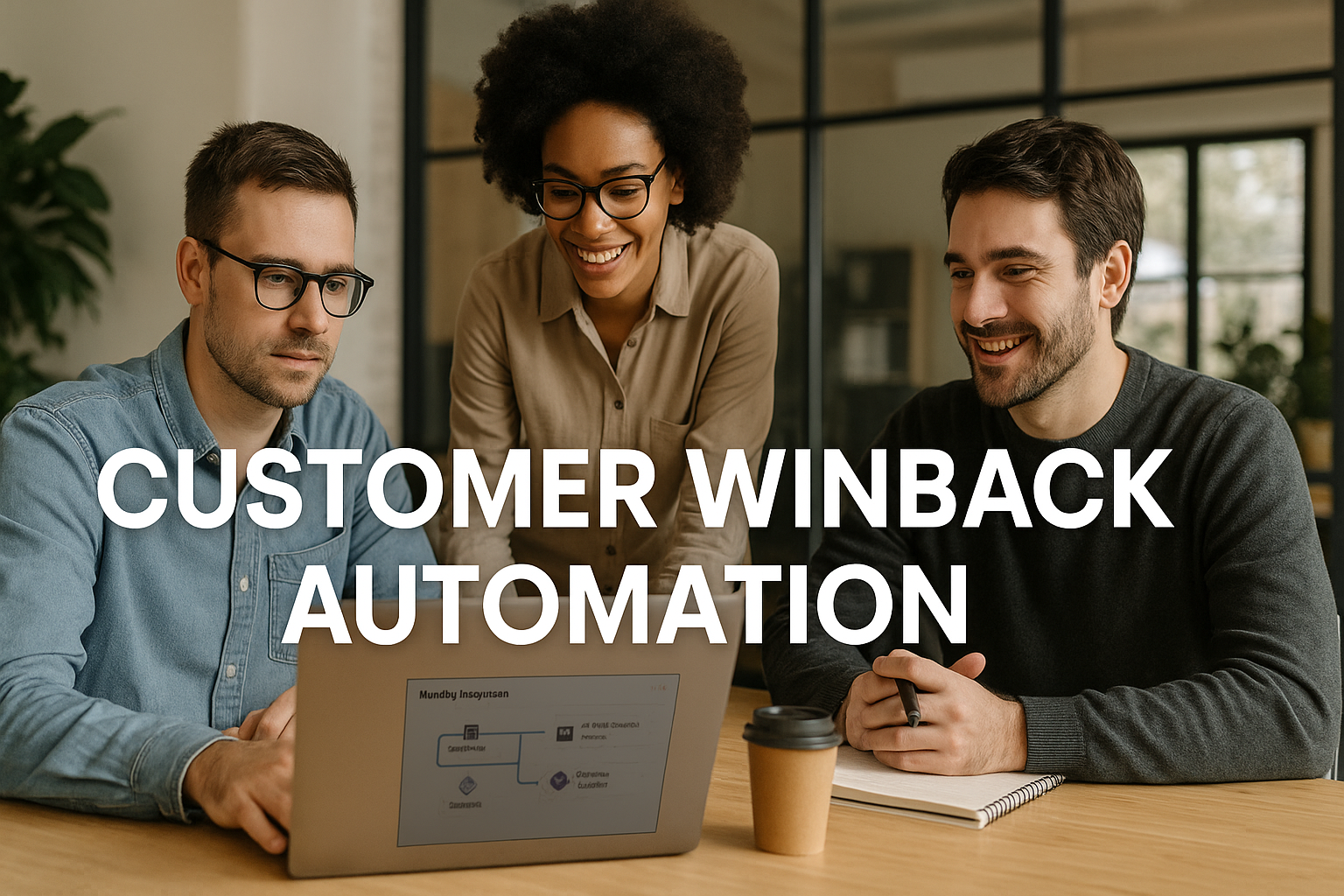

Customer winback automation isn't just about sending "We miss you" emails anymore. In 2026, businesses are deploying sophisticated strategies that identify dormant customers, predict their likelihood to return, and deliver precisely timed messages that convert at rates 3-5 times higher than traditional campaigns.
The reality is stark: 68% of customers who leave never return without intervention, yet most businesses let valuable relationships slip away. Meanwhile, forward-thinking companies are using automated winback systems to transform their dormant databases into consistent revenue streams. These aren't generic blast campaigns—they're intelligent, behavior-driven strategies that feel personal and timely.
The difference between businesses that recover lost customers and those that don't comes down to strategy. Here are ten proven customer winback automation approaches that are generating real results for businesses across industries.
1. Deploy Multi-Channel Orchestration for Maximum Reach
Most businesses make a critical mistake with dormant customers: they jump straight to the sale. After months of silence, they send a discount code and wonder why conversion rates hover in single digits. The relationship has cooled, trust has eroded, and customers need a reason to care again before they're ready to buy.
Progressive value ladders solve this problem by rebuilding customer relationships systematically. Instead of asking for the sale immediately, you provide a sequence of increasingly valuable interactions that gradually re-establish trust and demonstrate relevance. Each step offers genuine value while collecting engagement data that informs the next interaction.
Understanding the Value Ladder Framework
Think of re-engagement like dating after a breakup. You don't propose marriage on the first coffee meeting—you rebuild connection gradually. The same principle applies to dormant customers. Your value ladder should start with low-commitment, high-value interactions that require minimal effort from customers while providing immediate benefit.
The framework typically includes 5-7 progressive steps, each designed to move customers closer to purchase readiness. Early steps focus purely on providing value with no strings attached. Middle steps introduce your solutions in educational contexts. Later steps transition to direct commercial engagement once trust is re-established.
Designing Your Value Progression
Start by mapping what genuine value looks like for your dormant customers. What problems are they facing right now? What resources would they find immediately useful regardless of whether they buy from you? This isn't about thinly disguised sales content—it's about providing tools, insights, or resources that solve real problems.
Entry-Level Value: Your first touch should require zero commitment and provide immediate utility. Industry reports, useful templates, diagnostic tools, or educational content work well. The goal is simply to re-establish communication and demonstrate you understand their current challenges.
Mid-Level Engagement: Once customers engage with initial content, provide deeper resources that showcase your expertise. Mini-courses, detailed guides, strategy frameworks, or assessment tools help customers while subtly demonstrating your solution's relevance.
Pre-Purchase Steps: As engagement increases, introduce more direct interactions like consultations, product demos, or trial offers. By this point, customers have received substantial value and are more receptive to exploring commercial relationships.
Automation and Personalization Balance
The power of progressive value ladders lies in automation that feels personal. Your system should track which resources customers engage with and automatically advance them through the sequence based on their behavior. Someone who downloads your template and reads your guide is signaling readiness for the next step.
Build conditional logic that adapts the sequence based on engagement patterns. If a customer opens emails but doesn't click through, they might need different content than someone actively downloading resources. Create branching paths that respond to different engagement levels rather than forcing everyone through identical sequences.
Include multiple exit points where customers can make purchases without completing the full ladder. Some customers will be ready to buy after the second or third touch—don't make them wait for step seven. Design your automation to recognize purchase signals and adjust accordingly.
Measuring Ladder Effectiveness
Track progression metrics at each step to identify where customers typically convert or drop off. If most customers engage with your first two touches but abandon at step three, that step needs improvement. Maybe the value isn't compelling enough, or the commitment level jumps too dramatically.
Monitor time between steps to optimize pacing. Rushing through the sequence reduces effectiveness, but spacing touches too far apart loses momentum. Most businesses find success with 3-7 day intervals between early steps, extending to 7-14 days for later stages as commitment levels increase.
The key metric is ultimately conversion rate compared to direct sales approaches. Progressive value ladders typically show lower immediate conversion but higher overall recovery rates as they capture customers at different read
2. Create Urgency Through Limited-Time Comeback Offers
Dormant customers rarely respond to immediate sales pitches because the relationship foundation has eroded. They need a compelling reason to re-engage that doesn't feel like pressure—and that's exactly where limited-time comeback offers create the perfect catalyst for action.
The psychology is straightforward: urgency overcomes inertia. When customers have been inactive for months, they've developed new habits and routines that don't include your business. A well-crafted limited-time offer provides both the motivation to reconsider and the deadline that prevents indefinite postponement.
But here's the critical distinction: effective comeback offers aren't desperate discounts that devalue your service. They're strategic incentives that address specific barriers preventing customers from returning while creating genuine scarcity that drives decision-making.
Understanding What Makes Comeback Offers Convert
The most effective comeback offers solve the actual problems that caused customers to leave in the first place. A fitness center offering returning members a discount on dues misses the point if members left because they felt intimidated or unsure how to use equipment. A better offer might include complimentary personal training sessions that address the real barrier.
This requires understanding your churn patterns. Review cancellation feedback, support tickets, and exit surveys to identify common themes. Price concerns, feature complexity, lack of time, poor onboarding, and changed circumstances typically emerge as primary factors.
Your comeback offer should directly address these issues. If customers left due to complexity, offer extended onboarding support. If price was the barrier, provide flexible payment options rather than just discounts. If lack of time was the issue, highlight convenience features or flexible scheduling.
Structuring Offers That Drive Immediate Action
The offer structure itself determines response rates. Create tiered approaches based on customer value and likelihood to return. High-value customers who recently became inactive might receive premium offers like dedicated account management or exclusive access to new features. Longer-dormant customers might receive broader incentives focused on removing friction.
Time limits must be genuine and meaningful. A 30-day window feels arbitrary and easy to ignore. A 7-day deadline creates real urgency but may feel too aggressive for some segments. Test different timeframes with your audience, but always enforce the deadline—training customers to wait for better deals undermines future campaigns.
Scarcity elements beyond time limits can amplify urgency. Limited availability ("Only 50 spots available for returning members"), exclusive access ("Available only to former customers"), or seasonal relevance ("Get ready for Q4 with this special offer") all create additional motivation to act now rather than later.
Automating Offer Delivery and Follow-Up
Set up automated systems that deliver comeback offers based on specific triggers and customer segments. When a customer reaches your defined "dormant" threshold, the automation should immediately deploy the appropriate offer based on their segment, value tier, and churn reason.
The initial offer message should clearly communicate the value proposition, the specific deadline, and the simple steps required to accept. Avoid burying the offer in lengthy explanations—lead with the benefit and make acceptance frictionless.
Create automated follow-up sequences for customers who don't immediately respond. Send reminder messages at strategic intervals: perhaps at the halfway point and again 24 hours before expiration. Each reminder should emphasize different aspects of the offer's value and reinforce the approaching deadline.
For customers who engage with the offer but don't convert—opening emails, visiting landing pages, or adding items to cart—trigger additional nurture sequences that address likely objections and provide social proof of others who successfully returned.
Measuring and Optimizing Offer Performance
Track multiple metrics beyond just conversion rates. Monitor email open rates to gauge initial interest, click-through rates to measure engagement with offer details, and time-to
Putting It All Together
The most effective customer winback automation strategies don't rely on single tactics—they combine behavioral triggers with dynamic segmentation to identify the right customers at the right moment. Progressive value ladders rebuild relationships systematically, while predictive scoring ensures you're focusing resources where they'll generate the highest returns. Multi-channel orchestration meets customers where they're most active, and AI-powered personalization delivers relevance at scale.
Start with the fundamentals: implement behavioral triggers to catch customers during the drift phase, not after they're completely gone. Layer on segmentation to ensure your messaging addresses specific reasons for disengagement. Then add progressive value sequences that rebuild trust before asking for the sale. As your system matures, incorporate predictive scoring and AI personalization to maximize efficiency.
The businesses winning at customer winback in 2026 aren't just sending better emails—they're building intelligent systems that identify opportunities, deliver personalized experiences, and continuously optimize based on results. Your dormant database isn't a lost cause; it's an untapped revenue stream waiting for the right approach.
Ready to transform forgotten leads into active customers? Stop Leaving Money on the Table – Revive Your Leads in 7 Days or Less. RePitch AI's database reactivation system identifies your highest-potential dormant leads and deploys hyper-personalized sequences that convert—automatically. See how businesses are recovering revenue they didn't know they had.
Want More Appointments Without Buying More Leads?
Most businesses are sitting on hundreds or thousands of past inquiries that never converted. We built a simple SMS reactivation system that turns those forgotten leads into real conversations and booked appointments.
See How It Works