
January 31, 2026
7 Automated Customer Outreach Strategies That Turn Dormant Leads Into Revenue
Most businesses overlook a significant revenue opportunity sitting in their CRM databases: dormant leads and past customers who showed interest but never converted. Automated customer outreach solves this problem by systematically re-engaging these forgotten contacts with personalized messaging at scale, transforming inactive databases into consistent revenue streams without requiring manual follow-up that drains resources and falls through the cracks.
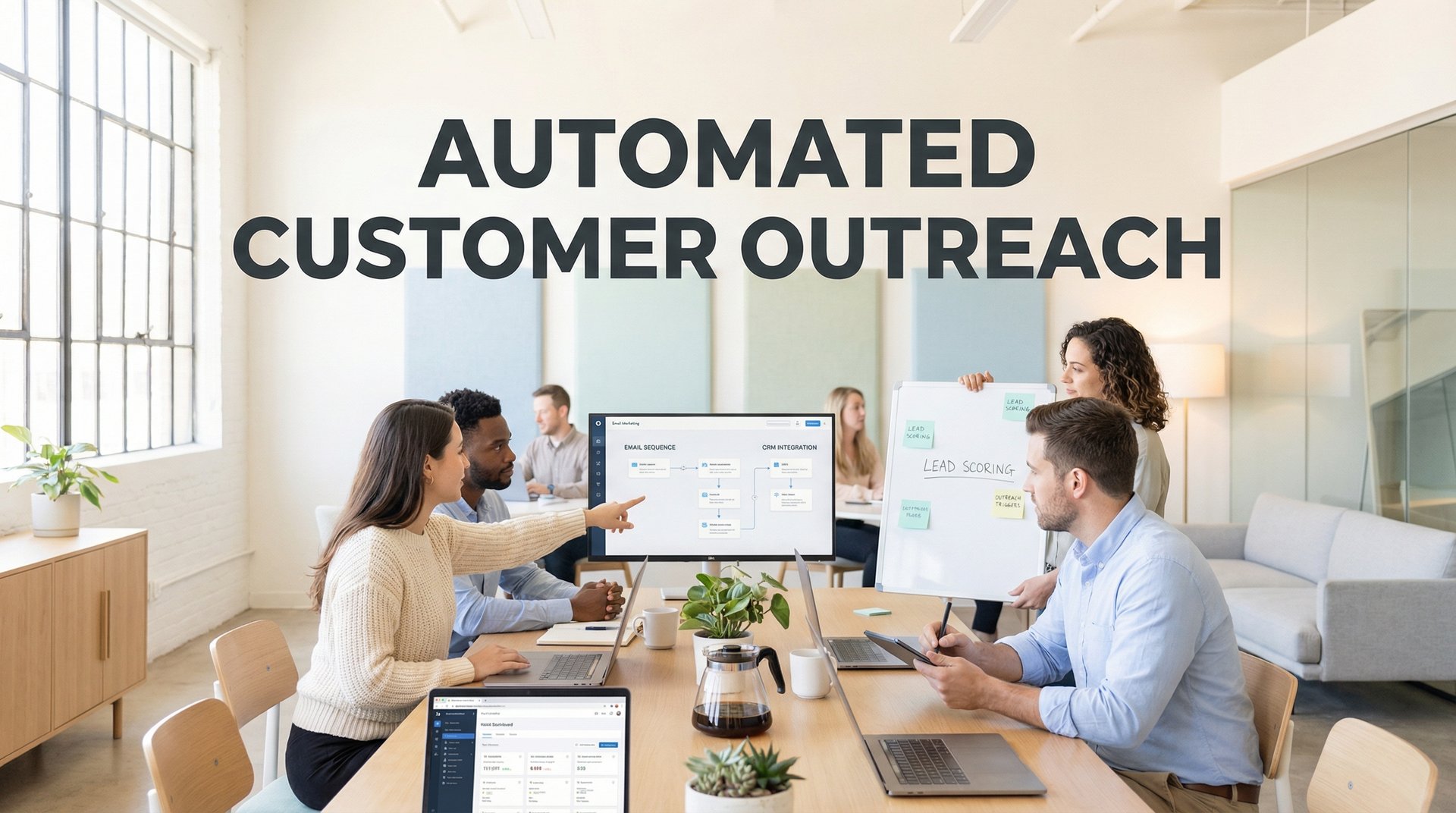

Most businesses sit on goldmines of untapped revenue—their existing CRM databases. While teams chase new leads, thousands of previous prospects and past customers collect digital dust. The math is sobering: for every hundred new contacts you add this month, hundreds more from previous months sit untouched, representing conversations that started but never finished, interest that cooled but never disappeared completely.
Automated customer outreach changes this equation entirely. Instead of manual follow-ups that drain resources and inevitably fall through the cracks, intelligent automation re-engages these forgotten contacts at scale with personalized messaging. The difference between a dormant database and an active revenue stream often comes down to systematic outreach that happens consistently, not sporadically when someone remembers.
This article delivers seven proven strategies to implement automated outreach that converts dormant leads into active buyers—without adding headcount or burning out your sales team. Whether you're running an audiology practice with years of patient screening data, managing a healthcare facility with consultation records, or operating any service-based business with accumulated prospect lists, these approaches work because they combine the efficiency of automation with the personal touch that drives responses.
The opportunity is immediate. The contacts already know your brand. They've already expressed interest. They just need the right message at the right moment to re-engage. Let's explore how to make that happen systematically.
1. Segment Your Database Before You Automate Anything
The Challenge It Solves
Blasting the same generic message to your entire database is the fastest way to generate unsubscribes and damage your sender reputation. A contact who inquired about hearing aids three years ago needs different messaging than someone who scheduled a consultation last month but never showed up. Without segmentation, your automated outreach treats vastly different prospects identically—and gets predictably poor results.
The problem compounds when you consider engagement history. Contacts who opened your last five emails deserve different treatment than those who haven't engaged in eighteen months. Sending aggressive sales messages to cold contacts triggers spam complaints, while sending gentle "just checking in" messages to warm prospects wastes hot opportunities.
The Strategy Explained
Database segmentation divides your contacts into meaningful groups based on recency, purchase history, engagement level, and specific interests before you launch any automated sequences. This foundational step determines everything that follows—your messaging strategy, channel selection, and outreach cadence all depend on which segment you're addressing.
For audiology practices, effective segments might include: recent hearing test recipients who didn't purchase, patients overdue for follow-up appointments, consultation no-shows from the past 90 days, and contacts from community screening events. Each group represents a different stage of awareness and requires tailored messaging that acknowledges their specific relationship with your practice.
The segmentation process reveals patterns you can't see in aggregate data. You might discover that consultation no-shows from corporate wellness events respond differently than walk-in no-shows, or that patients overdue by 6-12 months convert better than those overdue by 24+ months. These insights shape smarter automation strategies.
Implementation Steps
1. Export your complete CRM database and identify the key data points you have for each contact: last interaction date, source of lead, services inquired about, previous purchases, email opens, and any behavioral data your system tracks.
2. Create 5-7 primary segments based on recency and engagement: hot leads (interacted within 30 days), warm leads (31-90 days), cooling leads (91-180 days), cold leads (181-365 days), and dormant leads (365+ days). Add sub-segments based on service interest or lead source for more precise targeting.
3. Document the unique characteristics of each segment in a simple spreadsheet: what they know about your business, what objections they likely have, what value proposition resonates most, and what action you want them to take next. This becomes your messaging blueprint.
Pro Tips
Start with broader segments if your database is under 5,000 contacts—you can always refine later. For larger databases, invest time in detailed segmentation upfront because the ROI multiplies with scale. Tag contacts with their original lead source whenever possible; knowing someone came from a community health fair versus a Google search changes how you re-engage them. Review and update your segmentation quarterly as contacts age through different stages.
2. Deploy Trigger-Based Reactivation Sequences
The Challenge It Solves
Time-based automation sends messages on arbitrary schedules—"Day 1: Welcome email, Day 3: Feature overview, Day 7: Discount offer"—regardless of what the prospect actually does. This approach misses critical buying signals and often delivers irrelevant messages at the wrong moments. A prospect who clicks your pricing link on Day 2 shouldn't wait until Day 7 to receive your offer. Conversely, someone who hasn't opened a single email doesn't need the fifth message in your sequence.
The disconnect between automated timing and actual prospect behavior creates friction. You're essentially having a one-sided conversation that ignores whether anyone is listening or responding. Trigger-based automation solves this by responding to what contacts actually do rather than following a predetermined calendar.
The Strategy Explained
Trigger-based reactivation sequences launch specific messages in response to behavioral signals: email opens, link clicks, website visits, form submissions, or periods of inactivity. Instead of "send this email on Day 5," your automation says "send this email when they click the pricing page" or "send this SMS if they open two emails in 24 hours."
This approach works because it meets prospects where they are in their decision process. Someone who clicks through to your hearing aid comparison page is signaling active interest—that's the moment to offer a consultation, not three days later when their attention has shifted elsewhere. Similarly, a contact who goes dormant after initial engagement triggers a different sequence designed specifically for re-engagement.
For audiology practices, powerful triggers include: website visits to specific service pages, email opens after long periods of inactivity, clicks on appointment scheduling links, and form submissions for information downloads. Each trigger indicates a shift in engagement level that warrants immediate, relevant follow-up.
Implementation Steps
1. Map the key behavioral signals your CRM or marketing automation platform can track: email opens, link clicks, website page visits, form submissions, and time-based inactivity periods. Confirm your system can trigger automated actions based on these behaviors.
2. Build your first trigger sequence around high-intent actions: when a dormant contact clicks a link in your reactivation email, immediately send a follow-up SMS offering to schedule a call. When someone visits your pricing page, trigger an email within one hour addressing common cost concerns and offering financing options.
3. Create re-engagement triggers for declining activity: if a contact who was opening emails stops engaging for 30 days, trigger a "We miss you" sequence with a compelling reason to reconnect. If they still don't respond after 60 days, shift them to a different segment with less frequent touchpoints to preserve sender reputation.
Pro Tips
Start with 3-5 core triggers rather than trying to automate every possible behavior—complexity kills execution. The most valuable trigger for dormant lead reactivation is often the first sign of renewed engagement after a long silence; that's when to strike with your strongest offer. Build in delays between triggers to avoid overwhelming prospects who take multiple actions quickly. Test different trigger thresholds: does a single email open warrant follow-up, or should you wait for two opens within a week?
3. Prioritize SMS for Immediate Engagement
The Challenge It Solves
Email inboxes have become battlegrounds where your message competes with hundreds of others, promotional tabs bury your outreach, and spam filters increasingly aggressive. For dormant leads specifically, email fatigue is real—if they've ignored your previous emails, another email probably isn't the answer. You need a channel that cuts through the noise and reaches prospects where they actually pay attention.
The urgency problem compounds this challenge. When you're trying to reactivate a lead who expressed interest months ago, timing matters. An email they might read tomorrow (or next week, or never) doesn't create the immediate engagement that converts cooling interest into action.
The Strategy Explained
SMS outreach delivers messages directly to prospects' most-checked device with open rates that typically far exceed email. Text messages appear on lock screens, trigger notifications, and generally get read within minutes rather than hours or days. For dormant lead reactivation, this immediacy is crucial—you're trying to restart a conversation that went cold, and that requires capturing attention quickly.
The key is using SMS strategically, not as a replacement for email but as a precision tool for specific moments. When a dormant contact shows renewed interest by clicking an email link or visiting your website, an immediate SMS follow-up capitalizes on that moment of engagement. When you have a time-sensitive offer that could reactivate interest, SMS ensures the message actually reaches the prospect while the opportunity is still relevant.
For audiology practices, SMS works particularly well for appointment reminders, consultation follow-ups, and limited-time offers on hearing screenings. The personal nature of text messaging also suits healthcare contexts where building trust matters more than broadcasting to masses.
Implementation Steps
1. Verify you have proper consent for SMS outreach from your contacts—this is legally required under TCPA regulations and essential for maintaining trust. Review your lead capture forms and consultation paperwork to ensure they include SMS opt-in language. For existing contacts without documented consent, send an email requesting permission to text them with appointment reminders and special offers.
2. Craft concise, value-focused SMS templates for your reactivation sequences: introduction messages that remind recipients who you are and why you're reaching out, offer messages that present a clear reason to re-engage, and response-request messages that ask a simple question to start a conversation. Keep each message under 160 characters when possible for optimal delivery.
3. Build SMS into your trigger-based sequences as the rapid-response channel: when a dormant contact opens your reactivation email, send an SMS within 30 minutes offering to answer questions. When someone clicks your appointment scheduling link but doesn't complete booking, send an SMS within an hour offering to help schedule over the phone.
Pro Tips
Send SMS during business hours only (9 AM - 7 PM in the recipient's timezone) unless you have explicit permission for different timing—late-night texts generate complaints and opt-outs. Personalize beyond just the name: reference their specific previous interaction ("Hi Sarah, following up on your hearing test from March..."). Always include an easy opt-out mechanism in your messages. Test sending SMS from a local area code rather than a short code; many people are more likely to engage with what appears to be a local business number.
4. Leverage AI Personalization at Scale
The Challenge It Solves
Basic mail merge personalization—inserting a first name into a template—stopped being effective years ago. Recipients recognize generic templates instantly, and dormant leads especially need a reason to believe this outreach is genuinely about them, not just another mass email blast. Manual personalization works but doesn't scale when you're reactivating thousands of contacts. You need personalization that feels human without requiring human effort for each message.
The context problem makes this harder. A contact who inquired about hearing aids for their aging parent needs different messaging than someone exploring options for their own hearing loss. Someone who attended a free screening event has a different relationship with your practice than someone who scheduled a consultation but never showed. Generic messages ignore these crucial differences.
The Strategy Explained
AI-powered personalization analyzes the data you already have about each contact—past interactions, services inquired about, behavioral patterns, demographic information—and crafts messages that reference specific details relevant to that individual. This goes far beyond "Hi [FirstName]" to messages that acknowledge what stage of the journey someone was in when they went dormant and why they might care about re-engaging now.
Modern AI personalization can reference previous conversations, acknowledge how long it's been since the last interaction, tailor value propositions to specific concerns the contact expressed, and adjust tone based on the relationship level. For a contact who was close to purchasing, the message might focus on new options or financing. For someone who was just exploring, it might offer educational content that addresses their stage of awareness.
The power lies in combining automation with relevance. You can send thousands of messages, each one reading like it was written specifically for that recipient because, in a sense, it was—the AI assembled the message based on that person's unique data profile.
Implementation Steps
1. Audit what data you actually have about each contact in your CRM: interaction history, services discussed, objections noted, communication preferences, demographic details, and behavioral data. The richness of your personalization depends on the quality of this underlying data—clean it up before you automate.
2. Define personalization variables beyond basic demographics: what was their original inquiry about, how far did they progress in your sales process, what objections did they raise, what content did they engage with, and how long has it been since their last interaction. Create message templates that dynamically pull these variables into relevant contexts.
3. Implement AI-powered tools that can generate personalized message variations at scale—platforms like RePitch AI specialize in crafting hyper-personalized reactivation sequences that reference specific past interactions and tailor messaging to individual prospect profiles. Set up A/B tests comparing AI-personalized messages against your standard templates to quantify the improvement.
Pro Tips
Don't personalize everything—sometimes a straightforward message works better than one that feels over-personalized to the point of being creepy. Focus personalization on the elements that matter most: the reason for reaching out, the specific value proposition, and the call to action. Use AI to identify which contacts are most likely to respond to which types of messages, then prioritize accordingly. Review AI-generated messages periodically to ensure they maintain your brand voice and don't develop odd patterns that feel robotic.
5. Build Multi-Channel Outreach Sequences
The Challenge It Solves
Relying on a single communication channel assumes all your prospects prefer that channel equally and check it with the same frequency. Reality is messier: some people live in their email inbox while others rarely check it. Some respond immediately to texts while others find them intrusive. When you're trying to reactivate dormant leads, you can't afford to bet everything on one channel—if your prospect doesn't engage there, you've lost the opportunity.
Channel fatigue compounds the problem. If someone has ignored your last five emails, sending a sixth email probably isn't the breakthrough strategy. You need to reach them where they're actually paying attention, and that often means trying multiple channels in a coordinated sequence.
The Strategy Explained
Multi-channel outreach sequences coordinate touchpoints across email, SMS, and voice to reach prospects through their preferred communication methods. The key word is "coordinate"—you're not randomly spamming across channels, you're building a logical progression that uses each channel's strengths at the right moments.
A typical reactivation sequence might start with email because it's less intrusive and allows you to deliver more context and information. If the prospect engages by opening or clicking, you escalate to SMS for immediate follow-up. If they don't engage with email after 2-3 attempts, SMS becomes your breakthrough channel—the message that finally gets attention. For high-value prospects who engage across multiple channels but don't convert, a personal phone call becomes the natural next step.
For audiology practices, this might look like: initial email reactivation message highlighting new services or technology, SMS follow-up for email openers offering a specific appointment time, second email for non-openers with a different angle (patient success story or limited-time screening offer), SMS to non-responders with a direct question, and phone call for high-value prospects who engaged but didn't book.
Implementation Steps
1. Map out a 5-7 touchpoint sequence that alternates between channels based on engagement: Email 1 (reactivation message), wait 3 days, Email 2 (if no open on Email 1), wait 2 days, SMS 1 (for email openers or if still no engagement), wait 4 days, Email 3 (different angle), wait 3 days, SMS 2 (final outreach with clear deadline), wait 5 days, Phone call (for engaged prospects only).
2. Define clear rules for channel escalation: when does a prospect move from email-only to multi-channel outreach, what engagement signals warrant SMS follow-up, which prospects are worth personal phone calls. Document these rules in your CRM so your automation follows consistent logic.
3. Create channel-specific message variations that play to each medium's strengths: longer, content-rich emails that educate and build value; short, action-focused SMS that create urgency; phone scripts that open conversations rather than pitch. Ensure messaging is consistent across channels while adapting format appropriately.
Pro Tips
Don't hit all channels simultaneously—that feels like harassment, not helpful outreach. Space touchpoints 2-4 days apart to give prospects time to respond without losing momentum. Use email for complex information and SMS for simple, immediate actions. Reserve phone calls for prospects who have shown engagement but need a human conversation to convert—calling completely cold contacts rarely works. Track which channel generates the first response for each segment; you might discover that certain types of leads prefer specific channels, allowing you to optimize future sequences.
6. Implement Automated Lead Scoring for Prioritization
The Challenge It Solves
Not all dormant leads are equally valuable or equally likely to convert. Treating a prospect who visited your pricing page twice this week the same as someone who hasn't engaged in two years wastes your highest-value opportunities. Without a systematic way to identify and prioritize hot prospects emerging from your dormant database, your sales team either chases everyone (burning out quickly) or cherry-picks randomly (missing hidden opportunities).
The timing problem is critical. When a dormant lead suddenly shows renewed interest—opening multiple emails, visiting your website, clicking pricing links—they're signaling active consideration. That's the moment they need human attention, not three days later when your sales rep gets around to checking the CRM. Without automated prioritization, these hot moments cool off before anyone notices.
The Strategy Explained
Automated lead scoring assigns point values to engagement signals and behavioral actions, continuously calculating each contact's likelihood to convert. When a dormant lead's score crosses a threshold, your system automatically alerts your sales team or routes the lead for immediate follow-up. This ensures your human resources focus on prospects showing genuine buying signals rather than spreading attention equally across everyone.
The scoring model considers both explicit actions (email opens, link clicks, form submissions, website visits) and implicit signals (recency of engagement, number of touchpoints, specific pages visited, time spent on site). A contact who opens one email gets a few points. A contact who opens three emails in a week, visits your pricing page, and downloads a service guide gets flagged as hot and routed immediately.
For audiology practices, high-value scoring signals might include: visits to hearing aid comparison pages, clicks on appointment scheduling links, downloads of insurance coverage guides, multiple email opens within a short timeframe, and website visits following SMS outreach. Each signal indicates increasing purchase intent.
Implementation Steps
1. Define your scoring criteria based on what actions historically predict conversion: assign point values to different engagement types (email open = 5 points, link click = 10 points, pricing page visit = 20 points, form submission = 50 points). Weight recent activity more heavily than old activity—engagement this week matters more than engagement six months ago.
2. Set score thresholds that trigger specific actions: 0-25 points = continue automated nurture, 26-50 points = increase outreach frequency, 51-75 points = flag for sales review within 24 hours, 76+ points = immediate notification to sales rep with contact details and recent activity summary. Adjust these thresholds based on your team's capacity and conversion data.
3. Build automated workflows that act on score changes: when a contact crosses the 51-point threshold, automatically send an SMS offering a specific appointment time and notify the assigned sales rep. When a contact reaches 76+ points, create a task in your CRM with priority status and all relevant context so the rep can make an informed, timely call.
Pro Tips
Start with a simple scoring model and refine it based on actual results—don't try to account for every possible signal in version one. Review your scoring criteria quarterly by analyzing which scored leads actually converted versus which didn't; adjust point values to reflect reality. Implement score decay so contacts who go dormant again gradually lose points—a pricing page visit six months ago shouldn't keep someone flagged as hot indefinitely. Create different scoring models for different segments if their buying behaviors differ significantly (first-time prospects versus returning patients, for example).
7. Create Feedback Loops That Improve Results Over Time
The Challenge It Solves
Most businesses set up automated outreach once and then forget about it, letting the same sequences run indefinitely regardless of whether they're actually working. Without systematic measurement and optimization, you have no idea if your reactivation campaigns are performing well or poorly compared to their potential. You're flying blind, unable to identify what's working, what's failing, and what could work better with small adjustments.
The learning opportunity is massive. Every message you send generates data: open rates, click rates, response rates, conversion rates, unsubscribe rates, and ultimately revenue generated. This data reveals patterns about what messaging resonates, which channels work best for different segments, what timing optimizes engagement, and which offers actually motivate dormant leads to re-engage. Ignoring this feedback means repeating the same mistakes indefinitely.
The Strategy Explained
Feedback loops systematically track key performance metrics from your automated outreach, analyze what the data reveals about effectiveness, and implement continuous improvements based on those insights. This transforms your automation from a static process into a learning system that gets better over time.
The process involves three components: measurement (tracking the right metrics consistently), analysis (identifying patterns and opportunities in the data), and optimization (testing improvements and implementing what works). You're not making random changes hoping for better results—you're using actual response data to guide strategic refinements.
For audiology practices, valuable metrics include: reactivation email open rates by segment, SMS response rates by time of day, conversion rates from different offers (free screening versus discounted consultation), appointment show rates from reactivated leads, and revenue per reactivated contact. These numbers tell you whether your automation is actually driving business results or just generating activity.
Implementation Steps
1. Establish baseline metrics for your current automated outreach: calculate your average open rate, click rate, response rate, conversion rate, and cost per reactivated lead across all sequences. Document these numbers as your starting point—you can't improve what you don't measure.
2. Build a simple dashboard or spreadsheet that tracks these metrics weekly: segment performance by audience type, channel, message variant, and offer type. Look for patterns: which segments respond best to which approaches, which days/times generate higher engagement, which subject lines or opening sentences drive opens, which calls-to-action generate clicks.
3. Implement systematic A/B testing for key elements: test different subject lines against each other, try different offer types (discount versus free consultation versus educational content), experiment with message timing (morning versus afternoon, weekday versus weekend), and compare channel sequences (email-first versus SMS-first). Run each test long enough to generate statistically meaningful results—usually at least 100 contacts per variant.
Pro Tips
Test one variable at a time so you know what actually caused any change in performance—testing subject line and offer simultaneously makes it impossible to know which drove the improvement. Focus your optimization efforts on the highest-leverage elements first: subject lines and opening sentences (drive opens), calls-to-action (drive clicks), and offers (drive conversions). Set a regular review cadence—monthly is usually right for most businesses—and actually make changes based on what you learn. Document what you test and what you learn in a simple log; this institutional knowledge becomes invaluable over time. Celebrate improvements but also investigate failures—sometimes a test that "fails" reveals important insights about what your audience doesn't want.
Putting It All Together
Automated customer outreach isn't about replacing human connection with robots—it's about ensuring no lead falls through the cracks while your team focuses on the conversations that matter most. The seven strategies in this article work together as a system: segmentation creates the foundation for relevance, triggers ensure timely responses to buying signals, SMS cuts through inbox noise, AI personalization makes messages feel human, multi-channel sequences meet prospects where they prefer to communicate, lead scoring identifies your hottest opportunities, and feedback loops drive continuous improvement.
Start with database segmentation this week. You can't personalize what you haven't organized, and you can't automate effectively without understanding who you're talking to. Once your contacts are properly segmented, layer in trigger-based SMS sequences for your highest-value segments—this combination typically delivers the fastest results because it reaches engaged prospects at their moment of interest.
For businesses like audiology practices sitting on years of patient data—hearing screening attendees, consultation no-shows, patients overdue for follow-up care—these strategies can unlock significant revenue from contacts who already know and trust you. These aren't cold prospects you need to educate from scratch. They're warm leads who need the right message at the right moment to re-engage.
The technical complexity of implementing sophisticated automated outreach can feel overwhelming, especially when you're trying to run your core business simultaneously. Database reactivation platforms handle the heavy lifting—segmentation, trigger logic, multi-channel coordination, AI personalization, and performance tracking—so you can focus on serving the patients and customers your automation brings back.
Your dormant database represents real revenue waiting to be reactivated. Every month you delay implementing systematic automated outreach is another month those contacts drift further away or find solutions elsewhere. The contacts exist. The technology exists. The only question is whether you'll put them together before your competitors do.
Stop Leaving Money on the Table – Revive Your Leads in 7 Days or Less
Want More Appointments Without Buying More Leads?
Most businesses are sitting on hundreds or thousands of past inquiries that never converted. We built a simple SMS reactivation system that turns those forgotten leads into real conversations and booked appointments.
See How It Works